Should you show prices on your pet business website? Or make people call?
Honestly? There’s no perfect answer that works for every business. However, there’s definitely a strategic way to think about it.
The pricing question matters because it affects who contacts you. Additionally, it shapes how people perceive your business before they ever reach out.
When Showing Prices Works Best
Transparency works when your services are standardized. If every small dog grooming appointment costs roughly the same, show that price. People appreciate knowing what to expect. Moreover, clear pricing filters out people who can’t afford your services anyway.
Premium businesses especially benefit from visible pricing. When you’re not the cheapest option, showing prices actually helps. It filters price shoppers who’ll never book with you. Instead, you attract clients who value quality over bargains.
Visible pricing also reduces “just curious” calls. Your phone stops ringing with people who just want a quote. Instead, calls come from people who’ve already decided they can afford you. Furthermore, they’re ready to discuss scheduling rather than negotiate pricing.
Finally, showing prices improves your Google ranking. Search engines favor websites with comprehensive information. Additionally, price transparency signals trustworthiness to both Google and potential clients.
When Private Pricing Makes Sense
Keep pricing private when every service is truly custom. If you genuinely can’t estimate without seeing the pet, consultation-based pricing makes sense. For example, veterinary procedures that vary significantly based on pet condition.
Similarly, hide prices when they depend on extensive consultation. Complex behavior training that requires assessment. Specialized medical treatments with multiple variables. Services where quoting without evaluation would be misleading.
Some businesses also keep pricing private for competitive reasons. When you offer unique services without direct comparisons. Or when you’re testing market pricing. However, these situations are rarer than most businesses think.
The Sweet Spot Strategy
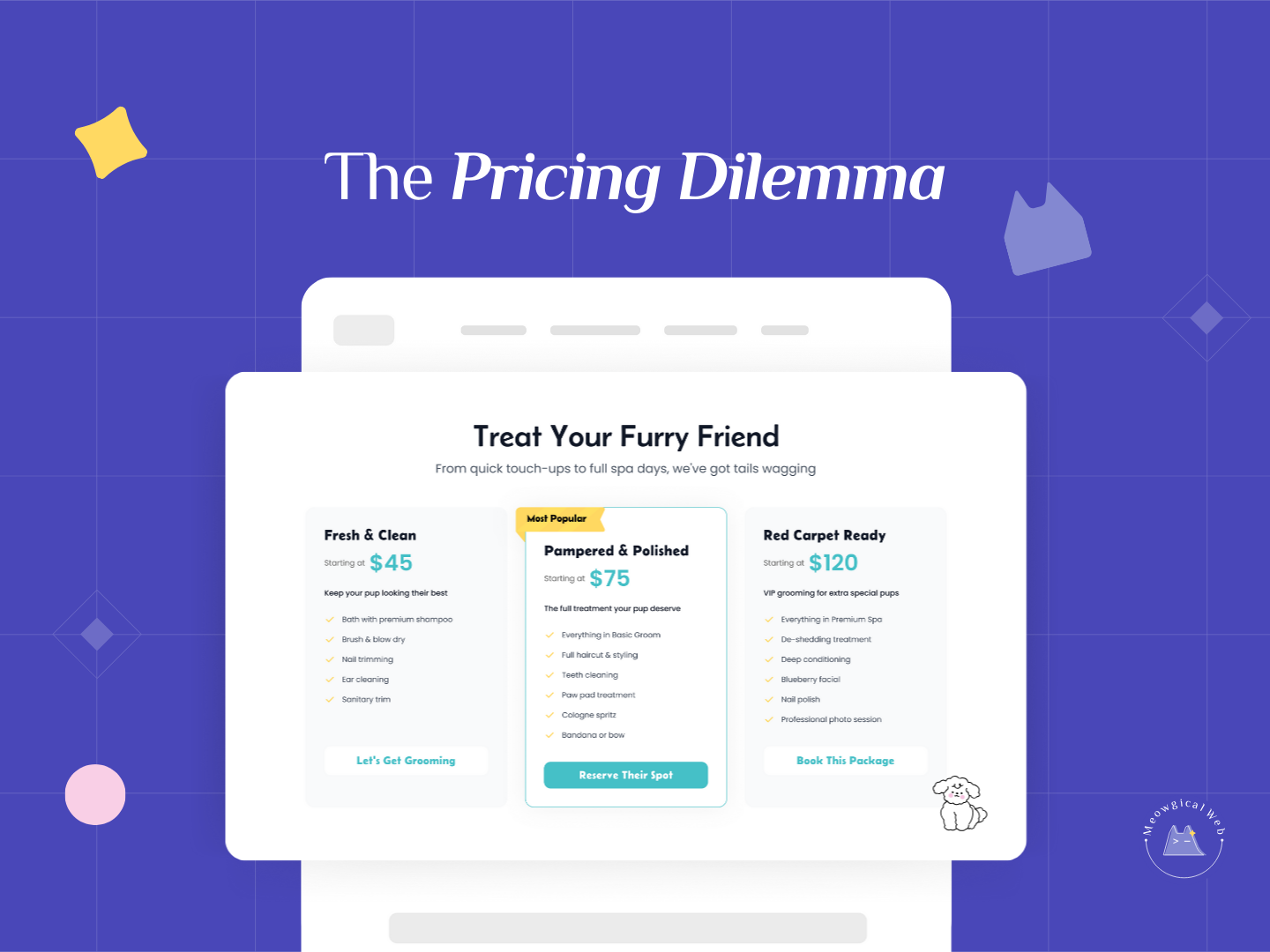
Price ranges with context work best for most pet businesses. They set expectations without committing to exact quotes. Moreover, they provide transparency while maintaining flexibility.
For example: “Small dog grooming: $45-65 (varies by coat condition)” tells people what to expect. They understand they might pay toward the higher end if their poodle is matted. Additionally, this filters out people expecting $30 grooming.
Another approach: “Basic vet exam: $75-125 (depends on needed tests)” gives a ballpark. People can budget appropriately. Meanwhile, you’re not locked into a price before knowing what’s needed.
Boarding facilities might say: “Standard kennel: $35-45/night (varies by season and amenities)” clarifies that holiday pricing differs. Additionally, it explains why some stays cost more.
According to pricing transparency research, 44% of buyers are willing to pay more when price information is readily available. Transparency builds trust that justifies premium pricing.
The Worst Approach
“Call for pricing” with zero context feels secretive. Anxious pet parents already have enough uncertainty. They’re worried about their pet’s care. Additionally, hidden pricing adds financial anxiety on top.
This approach also wastes everyone’s time. People call just to learn they can’t afford you. Your staff spends time on calls that never convert. Furthermore, potential clients who could afford you might not bother calling.
Hidden pricing suggests you’re ashamed of your prices. Or that you’re trying to trap people into sales pitches. Neither perception helps your business. Instead, they create distrust before conversations even start.
How to Display Prices Effectively
Start with your most popular services. Show clear prices for standard packages. For instance, grooming packages by dog size. Basic vet exam fees. Standard daycare rates.
Add context to explain variables. “Prices increase for matted coats requiring extra time” helps people understand. Similarly, “Senior pet exams may require additional testing” sets appropriate expectations.
Create clear service tiers when possible. Basic, standard, and premium packages work well. Each tier shows exactly what’s included. Moreover, tiered pricing helps people self-select their preference level. Related post: Why Simple Websites Help Pet Owners Choose Your Services Faster
Use starting prices when services vary significantly. “Boarding starting at $35/night” indicates a baseline. People understand costs might increase based on their needs. Additionally, this prevents sticker shock during booking.
Include what affects pricing. Grooming services might list: “Pricing based on size, coat condition, and temperament.” Veterinary services might note: “Final cost depends on required treatments.” Transparency about variables builds trust.
The Psychology Behind Pricing Display
Hidden prices make people assume the worst. They imagine costs higher than reality. Consequently, they might not even contact you. Meanwhile, your actual prices might have been within their budget.
Visible prices attract committed buyers. When someone contacts you after seeing prices, they’re more serious. They’ve already decided they can afford you. Furthermore, price discussions become simpler.
Premium pricing displayed proudly signals quality. Luxury pet services benefit from showing higher prices. It communicates expertise and exceptional care. Additionally, it attracts clients who want the best for their pets.
Common Pricing Mistakes
Some businesses show incomplete pricing. They list a few services but hide others. This creates confusion rather than clarity. Instead, be consistent about what you show and what requires consultation.
Others use deceptive “starting at” language. “$25 starting” when nobody actually pays $25 frustrates people. If your realistic minimum is $45, say that. Honesty prevents disappointed customers.
Many businesses forget to update prices. Old pricing on websites creates awkward conversations. “Actually, we raised prices six months ago” damages trust. Consequently, make price updates part of regular website maintenance.
Some over-explain pricing variables. Paragraphs about every possible factor overwhelm people. Instead, keep explanations brief. “Prices vary based on size and coat condition” says enough.
Testing What Works for Your Business
Try showing prices for one month. Track how it affects your phone calls. Do you get more qualified leads? Fewer tire-kickers? Additionally, monitor booking conversion rates.
Ask new clients how they found you. Did visible pricing influence their decision to contact you? Would hidden prices have made them look elsewhere? Their feedback reveals whether transparency helps your specific business.
Compare your approach to local competitors. If everyone in your area shows prices and you don’t, you seem suspicious. Conversely, if you’re the only one with transparent pricing, it might give you an advantage.
Track where price objections happen. If you’re constantly negotiating after people see your facility, your website prices might be misleading. However, if price objections are rare, your transparency is working well.
Making Your Decision
Consider your actual booking process. Do most services truly require in-person assessment? Or could you accurately quote 80% of requests sight unseen? Honest evaluation guides your pricing strategy.
Think about your ideal client. Are they budget-focused or quality-focused? Budget shoppers need exact prices upfront. Quality-focused clients care more about expertise and will call regardless.
Evaluate your competitive position. Are you premium, mid-range, or budget? Premium services benefit most from visible pricing. It filters appropriately and attracts committed clients.
Your pricing strategy should match your business model and ideal client. There’s no universally right answer. However, transparency almost always beats complete secrecy. Even if you can’t show exact prices, provide context and ranges.
Pet parents appreciate honesty about costs. Give them information to make informed decisions. Your booking process becomes smoother. Client relationships start on foundation of trust.