Automated appointment reminders are one of the easiest ways to reduce no-shows, save time, and keep your pet business schedule running smoothly. Research shows that text message reminders alone can cut missed appointments by up to 38%, and pet owners overwhelmingly prefer a quick text over a phone call they’ll probably ignore anyway. Instead of playing phone tag or leaving voicemails nobody listens to, a simple automated message lets clients confirm or cancel with one tap. It’s faster for them, less stressful for your team, and it keeps your chairs and kennels full.
The real cost of empty time slots
No-shows aren’t just annoying — they’re expensive. According to the American Animal Hospital Association, missed appointments happen in roughly one out of every ten bookings. For a busy grooming salon or vet clinic, that could mean hundreds of lost appointments each year.
Think about what that looks like in real numbers. If you charge $75 per grooming session and lose just two appointments a week to no-shows, that’s over $7,800 a year walking out the door. Meanwhile, you’ve still paid your staff, kept the lights on, and turned away other clients who would’ve happily taken those slots.
The frustrating part? Most of those missed appointments aren’t malicious. People simply forget. They booked three weeks ago, life got busy, and Tuesday’s grooming appointment slipped completely off their radar.
Why phone call reminders don’t work anymore
Here’s where a lot of pet businesses get stuck. They know reminders help, so they assign someone to call clients the day before. It sounds reasonable, but in practice it rarely works well.
Those calls take roughly eight minutes each when you factor in dialing, waiting, leaving voicemails, and trying again later. Multiply that across twenty appointments and your receptionist has just lost nearly three hours to phone tag. Furthermore, most clients — especially younger pet parents — simply won’t pick up an unknown number.
Text messages, on the other hand, have open rates above 90%. That’s not a typo. Nearly everyone reads a text within minutes of receiving it. A short message like “Confirm Bella’s grooming appointment tomorrow at 2pm — reply YES or CANCEL” takes two seconds to respond to. No awkward conversation, no voicemail, no calling back during business hours.
That shift from phone calls to texts isn’t just a generational preference anymore. It’s become the expected standard across almost every service industry. If your booking process still relies on phone calls, you’re creating friction that pushes clients toward competitors who make things easier.
The magic number: three reminders
Sending one reminder is good. Sending three is dramatically better. The businesses with the lowest no-show rates typically follow a staggered approach — 48 hours before, 24 hours before, and then a final nudge two hours before the appointment.
Each reminder serves a different purpose. The 48-hour message gives clients time to reschedule if something came up. The 24-hour reminder prompts them to confirm they’re still coming. And that last two-hour nudge acts as a gentle “heads up, we’re expecting you soon.”
This layered strategy works because it catches people at different moments. Someone who ignored Monday’s text might respond to Tuesday’s. Consequently, you’re filling cancellations earlier and keeping your schedule tight rather than discovering empty slots at the last minute.
What your reminders should actually say
The best appointment reminders are short, personal, and easy to act on. Include the pet’s name, the service, the date and time, and a clear way to confirm or cancel. That’s it.
Something like: “Hi Sarah! Just a reminder that Max has his nail trim and bath at 10am tomorrow. Reply YES to confirm or CANCEL to reschedule.” That message takes five seconds to read and one second to respond to. Compare that to a voicemail your client has to listen to, process, and then call you back about.
Personalizing the message with the pet’s name makes a noticeable difference too. It shows you’re not blasting generic notifications — you actually know who’s coming in and what they need. Rather than feeling like a corporate reminder, it feels like a friendly nudge from someone who cares about their pet.
Setting it up is simpler than you think
You don’t need to be tech-savvy to start sending automated reminders. Tools like PetDesk, Time To Pet, and MoeGo integrate directly with most scheduling platforms and handle everything automatically. Once a client books, the system sends reminders at the intervals you choose — no manual effort required.
Most of these tools also offer two-way messaging, so when a client cancels via text, the system flags that slot as open immediately. Your team can then fill it from a waitlist or offer it to walk-ins. Instead of discovering a gap when the client simply doesn’t show up, you find out early enough to do something about it.
If you’re not ready for dedicated software, even a basic SMS service works. The important thing is moving away from manual phone calls and toward a system that runs itself. Fortunately, most pet business owners who make this switch say they wish they’d done it years earlier.
Your schedule doesn’t have to be a guessing game
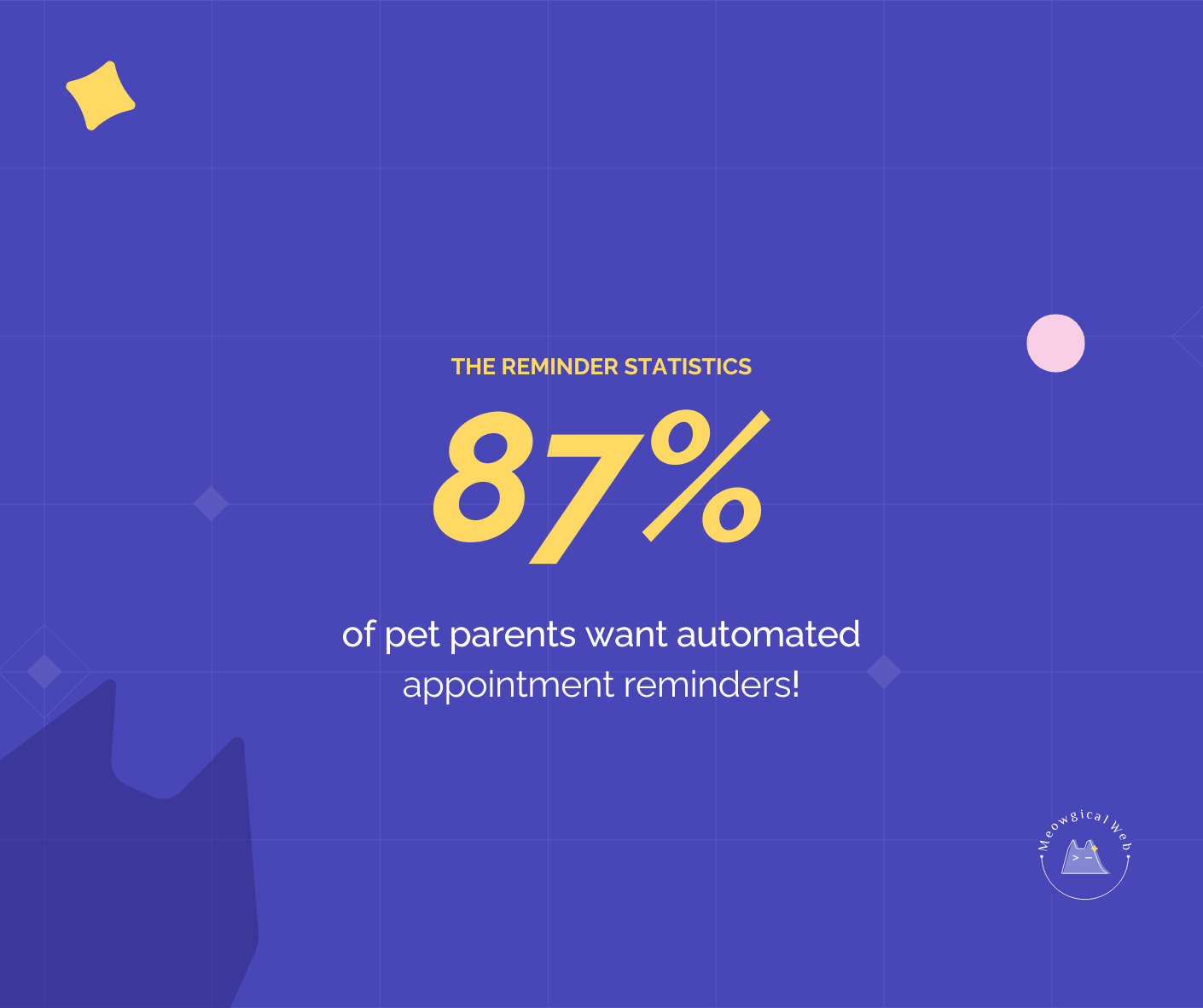
No-shows will never disappear entirely, but they don’t have to drain your revenue either. Automated text reminders are affordable, easy to set up, and genuinely effective at keeping your schedule full. Your clients want them — 87% of pet parents actually prefer getting a quick text over any other type of reminder.
Start with your busiest day of the week and see what happens. You’ll likely notice fewer gaps, fewer frantic phone calls, and a lot more confirmed appointments. That’s less stress for you and better care for the pets who need it.