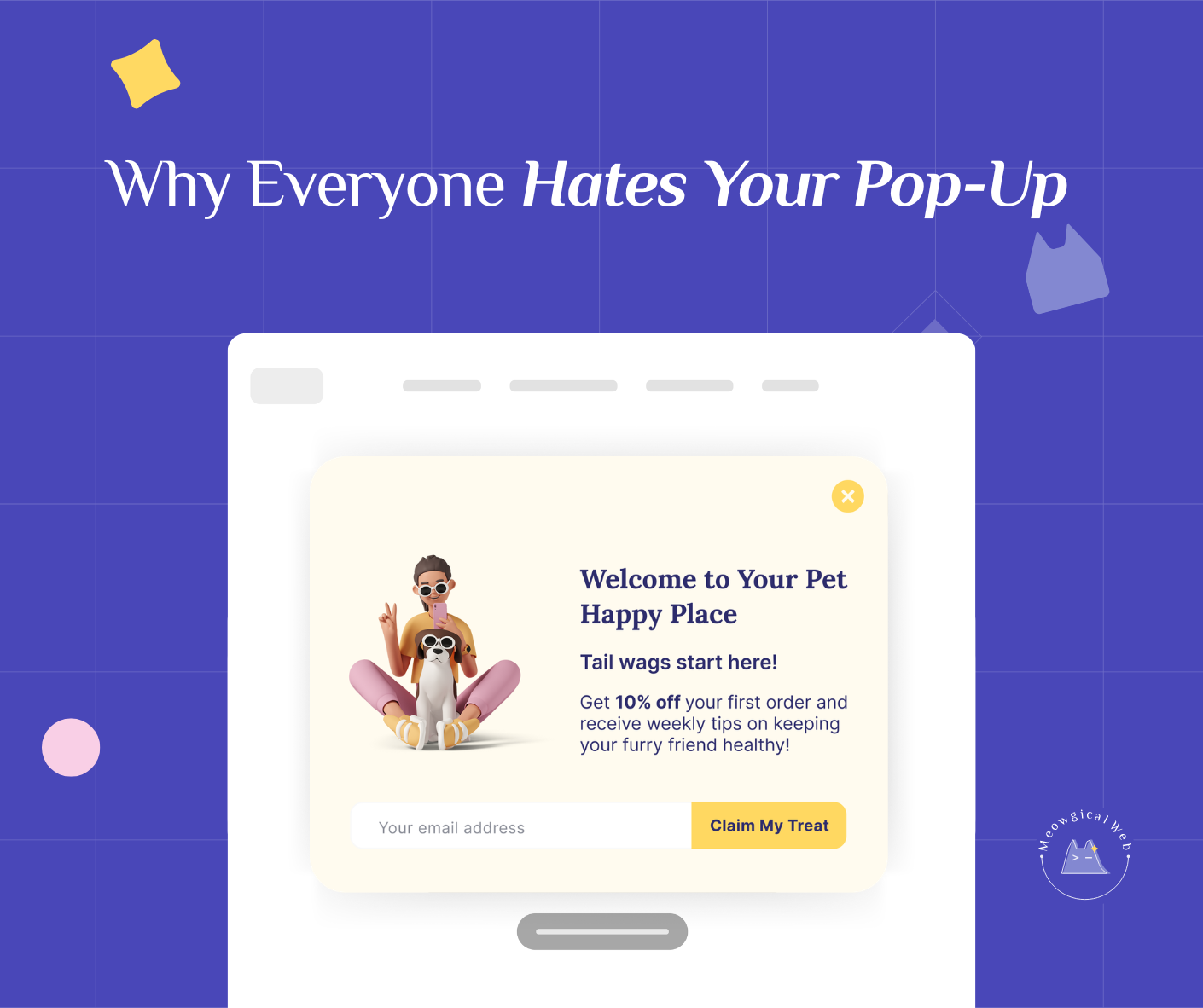
Fun fact: 95% of people close pop-ups without even reading them. Yet pet business websites keep using them anyway. “SIGN UP FOR 10% OFF!” appears exactly 2 seconds after the page loads, covering the content someone came to read.
Here’s the thing – these instant pop-ups aren’t just ineffective, they’re actively driving potential clients away. Additionally, on mobile devices where most pet parents browse, they’re absolutely rage-inducing.
Let me explain why pop-ups backfire for pet businesses and the rare situations where they might actually work.
Why Instant Pop-Ups Destroy User Experience
When someone visits your pet business website, they’re on a specific mission. Find your pricing. Book an appointment. Read reviews. Check if you accept cats. Moreover, they probably searched through several options before landing on your site, and they’re evaluating quickly.
Immediate pop-ups say: “Stop what you’re doing and pay attention to ME!” It’s like walking into a pet store and having an employee jump in front of you demanding your email before you can even look around. Additionally, it signals that you value your newsletter list more than actually helping visitors find what they need.
The psychology here matters. Pet parents are often already stressed when searching for services. Their regular groomer is booked, they need emergency boarding, or their anxious dog needs a new vet. Furthermore, adding digital obstacles to their already-stressful search amplifies frustration rather than building trust.
On mobile devices, instant pop-ups are exponentially worse. The close button is tiny and easy to miss. The pop-up covers the entire screen. Moreover, accidentally tapping the wrong spot submits a form you didn’t want to complete. Therefore, mobile visitors bounce faster when hit with immediate pop-ups.
According to Nielsen Norman Group’s research on pop-ups, pop-ups interrupt users’ tasks and cause them to lose focus on their original goal. Additionally, users have been trained to automatically close pop-ups without reading them, viewing them as obstacles rather than opportunities. For the 95%+ who close without engaging, you’ve just annoyed them for nothing.
Similar to how intrusive design elements damage trust, aggressive pop-ups create negative first impressions that are hard to overcome.
When Pop-Ups Actually Work
Exit-intent pop-ups trigger when someone’s about to leave anyway. Their mouse moves toward the back button or address bar. At that moment, offering a reason to stay makes sense. Additionally, you’re not interrupting their browsing – they were leaving regardless.
These work because timing matters. The visitor has already seen your content, decided it’s not quite right, and started to leave. Moreover, a well-crafted exit pop-up offering genuine value might change their mind.
Delayed pop-ups that wait 30+ seconds let visitors browse first. They’ve had time to read content, look around, and understand what you offer. Furthermore, someone still engaged after 30 seconds is more likely to be interested in your newsletter or offer.
Time on page indicates interest level. Someone who immediately bounces probably won’t convert anyway. However, someone reading your service descriptions for 30+ seconds is actively considering booking. Therefore, timing your pop-up to engaged visitors improves both conversion rates and user experience.
Pop-ups offering genuine value convert better than generic discounts. “Free guide: Preparing Your Dog for First Grooming” or “Downloadable checklist: What to Pack for Pet Boarding” provides something specific and useful. Additionally, these demonstrate expertise and build trust beyond just demanding emails.
Easy-to-close pop-ups with large, obvious X buttons respect user choice. The close button should be instantly visible and easy to tap on mobile. Moreover, respecting someone’s decision to dismiss your pop-up maintains goodwill for future interactions.
When Pop-Ups Fail Spectacularly
Instant pop-ups appearing 2-3 seconds after page load interrupt before visitors can even orient themselves. They haven’t read anything yet. They don’t know what you offer. Furthermore, forcing interaction before building any context just creates resentment.
Pop-ups on every single page visit become harassment. Seeing the same “SIGN UP NOW!” message on your homepage, services page, about page, and contact page is exhausting. Additionally, if someone dismissed it once, showing it repeatedly won’t change their mind.
Covering content people are actively trying to read is the worst offense. Someone starts reading your grooming services description, then BAM – pop-up blocks everything. Moreover, on mobile where content is already constrained, covering screens is particularly infuriating.
Multiple pop-ups in one session show complete disregard for user experience. Exit pop-up after dismissing the instant pop-up after closing the newsletter banner creates the digital equivalent of being accosted by multiple salespeople. Furthermore, this aggressive approach drives visitors away permanently.
Tiny close buttons that are hard to find or tap signal bad faith. When closing your pop-up requires precision tapping or hunting for hidden X buttons, visitors feel trapped. Additionally, this manipulation damages trust in ways that affect booking decisions.
The Mobile Experience Problem
Mobile pop-ups are especially problematic because screens are small and fingers aren’t precise. That close button that’s easy to click with a mouse becomes nearly impossible to tap accurately on a phone. Moreover, accidentally submitting forms when trying to close them infuriates people.
Google actually penalizes intrusive mobile pop-ups in search rankings. Their mobile-friendly algorithm specifically targets pop-ups that make content inaccessible on mobile devices. Therefore, aggressive pop-ups hurt both user experience and SEO simultaneously.
Test your pop-ups on actual mobile devices, not just by resizing your browser. The experience is dramatically different. Additionally, try closing your own pop-up on a phone while holding it one-handed – if it’s difficult, fix it.
What to Offer Instead of Generic Discounts
First-time discount offers train people to never pay full price. If you always offer 10% off for email signups, customers just open incognito windows or use different emails. Moreover, you’re devaluing your services rather than building relationships.
Genuinely useful content works better for long-term relationships. Downloadable guides, checklists, or resources demonstrate expertise. Furthermore, people who download your content are self-selecting as engaged prospects worth nurturing.
Early booking incentives for existing services make more sense. “Book your holiday boarding now and get preferred time slots” offers real value without discounting. Additionally, it helps you manage capacity while rewarding planning.
Testing Life Without Pop-Ups
Here’s an experiment: turn off your pop-ups for one month. Track your bounce rate, time on site, and actual booking conversions. Additionally, monitor whether email signups from other sources (footer forms, contact page CTAs) increase.
Many pet businesses discover their bounce rate improves significantly without pop-ups. People stay longer, read more, and ultimately book more often. Moreover, visitors who voluntarily sign up via footer forms are more engaged subscribers anyway.
Compare conversion rates honestly. Yes, pop-ups might capture more email addresses. However, if those emails don’t convert to bookings, what’s the actual value? Furthermore, if removing pop-ups increases booking conversions by reducing bounces, you’re trading low-quality leads for high-quality clients.
Alternative Lead Capture Methods
Inline newsletter signups in your footer don’t interrupt anyone. Visitors scrolling to the bottom have already engaged with your content. Additionally, footer signups are available on every page without being intrusive.
Content upgrade offers within blog posts convert well because they’re contextually relevant. Reading about grooming anxious dogs? Offer a downloadable guide specifically about anxiety-reducing grooming techniques. Moreover, this targets interested readers rather than interrupting casual browsers.
Exit-intent only, not instant load, provides the best balance. You’re making one offer to leaving visitors without bothering engaged browsers. Furthermore, exit-intent technology has improved significantly and works well on mobile now.
Chatbots that wait for interaction rather than auto-opening respect user control. A small chat icon in the corner lets people initiate conversation when ready. Additionally, this feels helpful rather than pushy.
The Trust Question
Pet parents are trusting you with family members. Every interaction shapes whether they feel comfortable with that trust. Moreover, aggressive marketing tactics signal that you might be pushy about other things too.
Your website should make people feel welcome and informed, not trapped and frustrated. Additionally, the businesses that consistently win clients are those that respect boundaries and provide value without demands.
Do you use pop-ups on your pet business website currently? How do you honestly feel when you encounter them on other sites? Moreover, have you tested what happens to your conversions when you remove them?
The answer might surprise you. Sometimes less aggressive marketing creates more trusting relationships, which ultimately drives more bookings than any pop-up ever could.