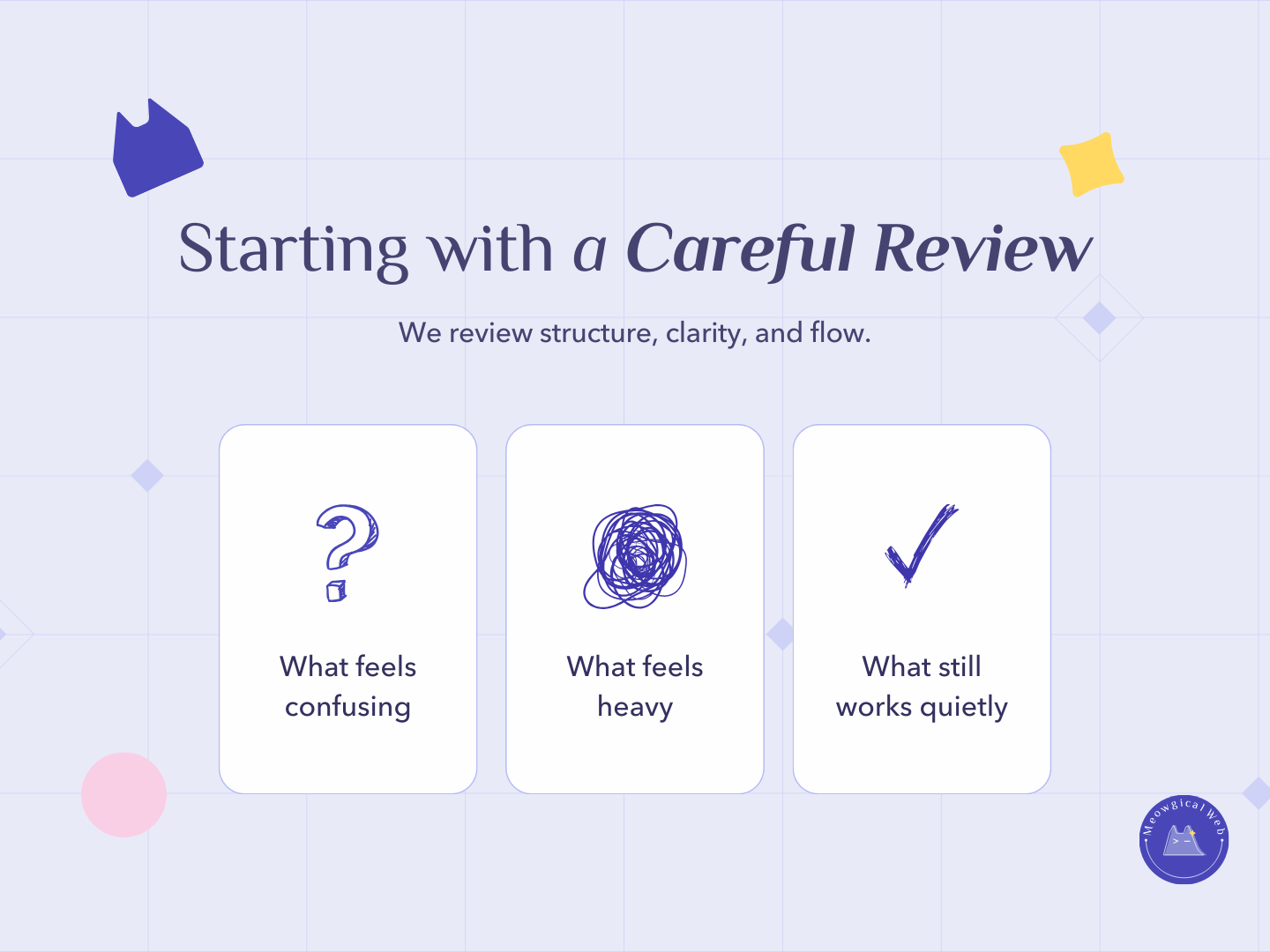
At the start of a new year, we don’t rush into redesigns. Instead, we take time to review carefully first. We look at structure. Then we check clarity. Next, we test flow. After that, we plan changes.
Three Key Questions We Ask
When reviewing websites, we focus on three main areas. Additionally, these questions guide our entire review process:
What Feels Confusing
First, we look for confusion points. Where do visitors get lost? Then we check what makes them pause. Finally, we find pages that make people leave.
For instance, 88% of users won’t return after a bad experience. So finding confusion matters a lot. Moreover, it affects your bookings directly. Plus, it impacts growth too. Related post: The Simple Search Insight That Transforms Pet Websites
What Feels Heavy
Next, we find what feels heavy. Are pages too long? Do they feel cluttered? Also, do processes take too many steps? Furthermore, where does the site feel too much?
Heavy sites exhaust visitors fast. Moreover, they make simple tasks feel hard. So we look for ways to lighten things up.
What Still Works Quietly
Then we find what’s working well. Which parts function smoothly? Additionally, what do visitors use without problems? Furthermore, where does flow feel natural?
This step matters a lot. First, you don’t want to break what works. Plus, knowing success helps you copy it elsewhere.
Why Review Before Redesign
Many businesses skip this step. Instead, they jump straight into redesigning everything. However, this creates big problems later.
Without reviewing first, you waste time and money. Additionally, you might remove things that work well. Or you might miss the real problems. Then you redesign again in six months.
In fact, reviewing structure before redesign prevents costly mistakes. Moreover, it helps you make better choices upfront. So you build something that truly lasts.
Our Review Process
Here’s how we review websites. Additionally, this process takes time. However, it saves headaches later:
Map The Current Structure
First, we document everything that exists now. Pages get noted carefully. Then they get sorted properly. Additionally, paths get mapped out clearly. As a result, this creates a complete picture.
Check User Flow
Next, we track how people move. Where do they enter your site? Additionally, which pages do they visit next? Furthermore, where do they get stuck?
These patterns reveal truth about your site. Moreover, data shows what’s really happening. Not what you think is happening.
Test Core Actions
Then we test every key action. Can people book easily? Additionally, do forms work on all devices? Furthermore, are prices shown clearly upfront?
Plus, content review should happen early in redesign. Moreover, it prevents friction later. Also, it stops delays too. So we tackle this step right away.
Gather Real Feedback
Also, we talk to actual users. What do they find confusing? Additionally, what frustrates them most? Furthermore, what would make things easier?
Real feedback beats guessing every time. Moreover, users tell you exactly what’s wrong. So listen to them carefully.
What Slow Reviews Reveal
Taking time with reviews reveals key things. First, you see patterns you missed before. Then you understand what truly matters. Finally, better choices become clearer.
For example, maybe your booking button is fine. However, the form behind it feels too long. Or perhaps your services make sense. But prices hide three clicks away.
These insights guide smart redesigns. Moreover, they help you fix real problems. Not made-up ones you assumed.
Common Review Findings
After reviewing hundreds of pet business sites, we see patterns:
Hidden Contact Information
First, contact info gets buried too deep. Pet owners need help fast sometimes. However, they can’t find phone numbers or emails quickly.
Unclear Service Descriptions
Next, services feel vague or confusing. What’s included in grooming exactly? Additionally, how long does boarding take? Furthermore, prices and details hide.
Complex Booking Processes
Then booking takes too many steps. Moreover, forms ask for info twice. Additionally, pages load slowly between steps. Consequently, people quit halfway through.
Mobile Problems
Finally, mobile feels cramped or broken. Moreover, buttons don’t work on phones well. Additionally, text looks too small to read. Furthermore, menus hide key info.
Making Changes That Last
Once you know what needs fixing, changes become clearer. First, you know exactly what to fix. Then you don’t waste time on wrong things. Finally, you build something that works better.
This approach creates lasting fixes. Not quick fixes that break later. Additionally, not redesigns you regret in months.
Start by fixing the heaviest problems first. Then tackle confusing parts next. Finally, boost what’s already working well.
Questions To Ask Yourself
Ready to review your own site? First, ask yourself these questions:
- Initially, do visitors find services fast?
- Additionally, are prices shown clearly early?
- Furthermore, does booking work well on phones?
- Also, can people contact you easily?
- Finally, what gets the most complaints?
Write down your answers honestly. Then look for patterns in them. These patterns show your priorities.
Starting Your Review
You don’t need fancy tools to start. Instead, begin with simple watching and asking. Spend time clicking through your own site. Also, try booking on your phone yourself.
Additionally, ask friends for honest feedback. Watch them use your site quietly. Furthermore, notice where they pause or struggle.
These simple steps reveal most problems. Then you can decide what needs fixing most.
Ready to review your website well? First, take time to see what’s really happening. Find what needs fixing most. Then contact Meowgical Web Studio when you’re ready. We help pet businesses review carefully before redesigning. Our process makes changes that truly last.