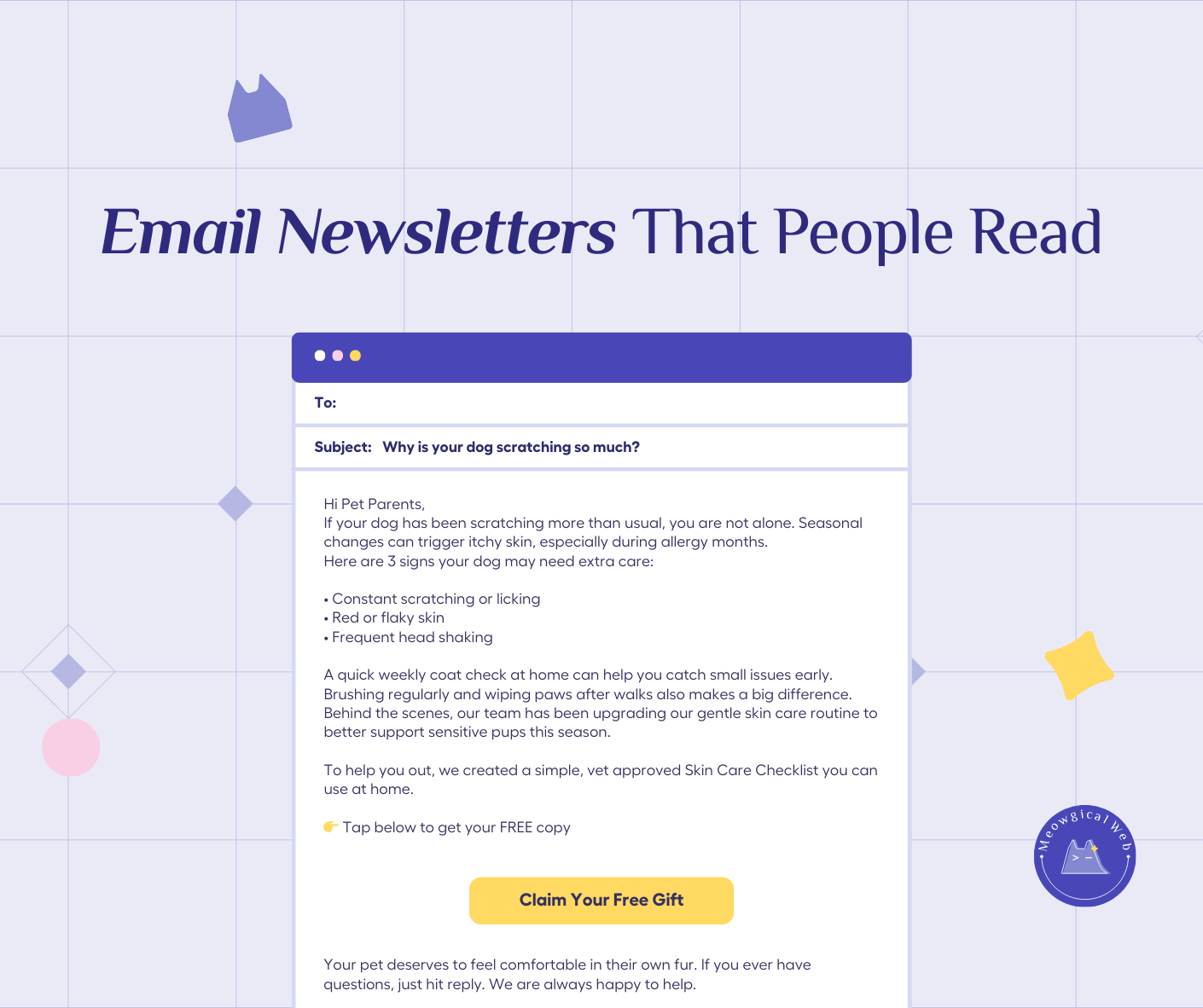
Most pet business email newsletters get 12-15% open rates because they focus on promotions instead of providing value. Effective newsletters help before they sell, using subject lines that spark curiosity rather than announce updates, and containing genuinely useful pet care tips, team introductions, or local recommendations. Sending helpful content every 2-4 weeks builds trust with subscribers who want to learn about pet care, not receive sales pitches. The businesses with 25-35% open rates share one thing in common: they treat newsletters like advice from a knowledgeable friend rather than marketing campaigns.
I opened my inbox yesterday morning. Fourteen emails from businesses. Pet supply store: “March Sale – 20% Off!” My vet’s office: “Monthly Newsletter – Book Your Appointment!” A grooming salon: “Spring Special Inside!”
I deleted all fourteen without opening a single one.
Then I saw one from a dog trainer I’d met once at a park. Subject line: “Why is your dog ignoring you at the park?” I clicked immediately. Additionally, I spent five minutes reading about recall training. No sales pitch. Just helpful advice.
Guess who I called two weeks later when my dog started pulling on leash? Exactly.
The Email That Made Me Cry
Last month, a boarding facility owner called me. Actually called. Voice shaking slightly. “I’m about to send my final newsletter before I give up. Nobody opens them anymore.”
Her open rate was 9%. Out of 800 subscribers, maybe 70 people even saw her emails. Additionally, she’d been sending weekly promotional emails for two years straight. “Book your boarding now! Spring special! Summer deals!”
I asked her what she’d want to read from a pet care business if she wasn’t the owner. She paused. “Honestly? Tips on helping my anxious dog. Stories about other people’s pets. Maybe what’s new in the area for dogs.”
“Why aren’t you sending that?” I asked gently.
She didn’t have an answer. Additionally, nobody had ever told her newsletters could be anything besides promotions.
We rewrote her next email together. Subject line: “3 signs your dog needs a dental cleaning (most owners miss #2).” Content: genuine health advice. A quick story about a client’s dog. Additionally, one tiny mention of their dental cleaning service at the very end.
Open rate: 34%. Her hands were shaking when she texted me the screenshot. Moreover, three people booked dental cleanings that week. From an email. Not a promotional one.
According to Mailchimp’s email benchmarks, average open rates across industries hover around 21-22%. Pet services often fall below that. Moreover, the difference between 12% and 30% open rates? Value versus promotion.
Similar to how helpful content beats sales pitches, email newsletters that teach instead of sell build relationships that convert naturally.
The Newsletter I Almost Unsubscribed From
I was on a vet clinic’s email list for eight months. Every single email was identical. “Monthly update! We’re here for your pet! Book your checkup!” Additionally, I couldn’t remember why I’d subscribed. These emails gave me nothing.
Then something changed. New email: “Meet Dr. Sarah – she’s obsessed with senior cats (and here’s why that matters for your 8-year-old tabby).”
I have an 8-year-old tabby. I read every word. Additionally, I learned things about senior cat care I’d never known. Dr. Sarah seemed like a real person who genuinely loved what she did.
Next email: “Why is your cat drinking so much water?” Another thing I’d been wondering about. Moreover, they included a simple checklist I could actually use.
I went from deleting their emails to opening them immediately. Furthermore, when my cat needed a tooth extraction three months later, I didn’t even consider other vets. I already trusted them.
What Nobody Tells You About Subject Lines
Your subject line determines everything. “March Newsletter” tells me nothing interesting is inside. Additionally, I’ve seen March newsletters from 47 other businesses. Yours gets deleted.
“Why is your dog scratching so much?” makes me curious. Is my dog scratching? Should I be worried? Moreover, if my dog has been scratching, this feels perfectly timed.
I tested this with a grooming client. Her old subject lines: “April Update,” “Spring Grooming Special,” “Monthly Tips from [Business Name].”
Her new subject lines: “Is your dog’s coat matted? Here’s the test,” “3 things groomers notice that owners miss,” “Why some dogs hate baths (and what helps).”
Same content. Different subject lines. Additionally, her open rates jumped from 14% to 28% in six weeks. Same subscribers. Just curiosity instead of announcements.
The Weekly Email Trap
Everyone says you need to email weekly. Build consistency. Stay top of mind. Additionally, weekly emails for most pet businesses are too much. You’re not The New York Times.
Unless you have genuinely valuable content every single week, you’re annoying people. Moreover, forcing weekly emails leads to filler content nobody wants.
My friend ran a pet supply store. Weekly emails for a year. “New products! Check out our shelves! Come visit!” Additionally, her unsubscribe rate climbed steadily. People were opting out specifically because she emailed too often with nothing new to say.
We switched to every three weeks. Only sent when she had something actually useful. Additionally, her open rates doubled. Unsubscribes dropped by 60%. Furthermore, people started replying to her emails. They never did that before.
Quality beats frequency. Always. Moreover, one excellent email monthly outperforms four mediocre weekly ones every single time.
The Client Spotlight Magic
Here’s something that surprised me. Client spotlights get crazy high engagement. Additionally, featuring a regular client’s pet makes everyone happy.
A doggy daycare started featuring one pup weekly. “This is Charlie! He’s been coming here for three years. His favorite activity is…” Short. Sweet. Additionally, they included a photo of Charlie playing.
Their open rates went from 16% to 31%. Moreover, clients started asking when their dog would be featured. They brought better photos. Additionally, people forwarded these emails to friends saying “look how cute!”
People love seeing pets celebrated. Their own or others. Furthermore, this costs you nothing. Takes maybe five minutes. Moreover, it builds community feeling that pure promotional content never creates.
The Gentle Sell That Actually Works
You can still promote your services. Just do it gently after providing value. Additionally, make it feel natural. Not forced.
After content about senior cat care: “If it’s been over a year since your cat’s last checkup, we’re booking senior wellness exams for next month. These exams include everything we talked about today.”
Natural. Relevant. Moreover, not pushy because you’ve already helped them learn something useful.
I watched a trainer use this approach. She sent an email about leash pulling. Actionable tips. Additionally, at the very end: “Want more personalized help? Our small group classes start next month.”
Three people signed up. She normally got zero signups from emails. Moreover, all three mentioned they appreciated learning the free tip first.
What Your Footer Really Needs
Always include an unsubscribe link. Required by law. Additionally, removing people who don’t want emails improves your overall rates anyway.
One groomer worried unsubscribe links would lose clients. We added one. Additionally, her engagement actually improved. The people who stayed wanted to be there.
Include your business info and contact details. Shows you’re real. Additionally, makes contacting you easy if someone wants to book after reading.
The Transformation That Changed Everything
Remember the boarding facility owner from the beginning? The one ready to give up on email?
She’s been sending value-first emails for six months now. Open rates consistently hit 30-35%. Additionally, people reply to her emails. They ask questions. Share photos.
Last week someone forwarded her email to a friend who booked a month of weekend boarding. Moreover, another client mentioned her newsletter during pickup, saying how much she loved the training tips.
She texted me: “I actually enjoy writing these now. It’s like talking to friends about pets instead of trying to sell things.”
That’s the whole point. Additionally, when you enjoy creating your newsletter, that energy shows through. People feel it.
Starting Over If You’ve Messed Up
If your current newsletter is all promotions, acknowledge it. Next email: “I’ve been doing this wrong. Starting now, I want to actually help you care for your pets better.”
People appreciate honesty. Additionally, they’ll give you another chance if you’re genuine about changing.
Ask subscribers what they want to learn. Simple survey. “What pet care topics would actually help you?” Moreover, this ensures you create content people care about.
Send one purely valuable email. Zero promotion. Additionally, prove you mean it. Furthermore, rebuilding trust takes consistency but absolutely works.
The Truth About Trust and Bookings
Give value consistently. Pet parents learn to trust your expertise. Additionally, when they need services, you’re the obvious choice. You’ve been helping them for months.
You’re not hard-selling. You’re staying present. Moreover, these warm relationships convert infinitely better than promotional emails ever could.
What’s your newsletter open rate right now? Be honest. Additionally, if it’s under 20%, your content probably needs more help and less selling.
Start with your next email. Pick one useful topic. Write like you’re texting a friend. Moreover, watch what happens when you help before you sell.