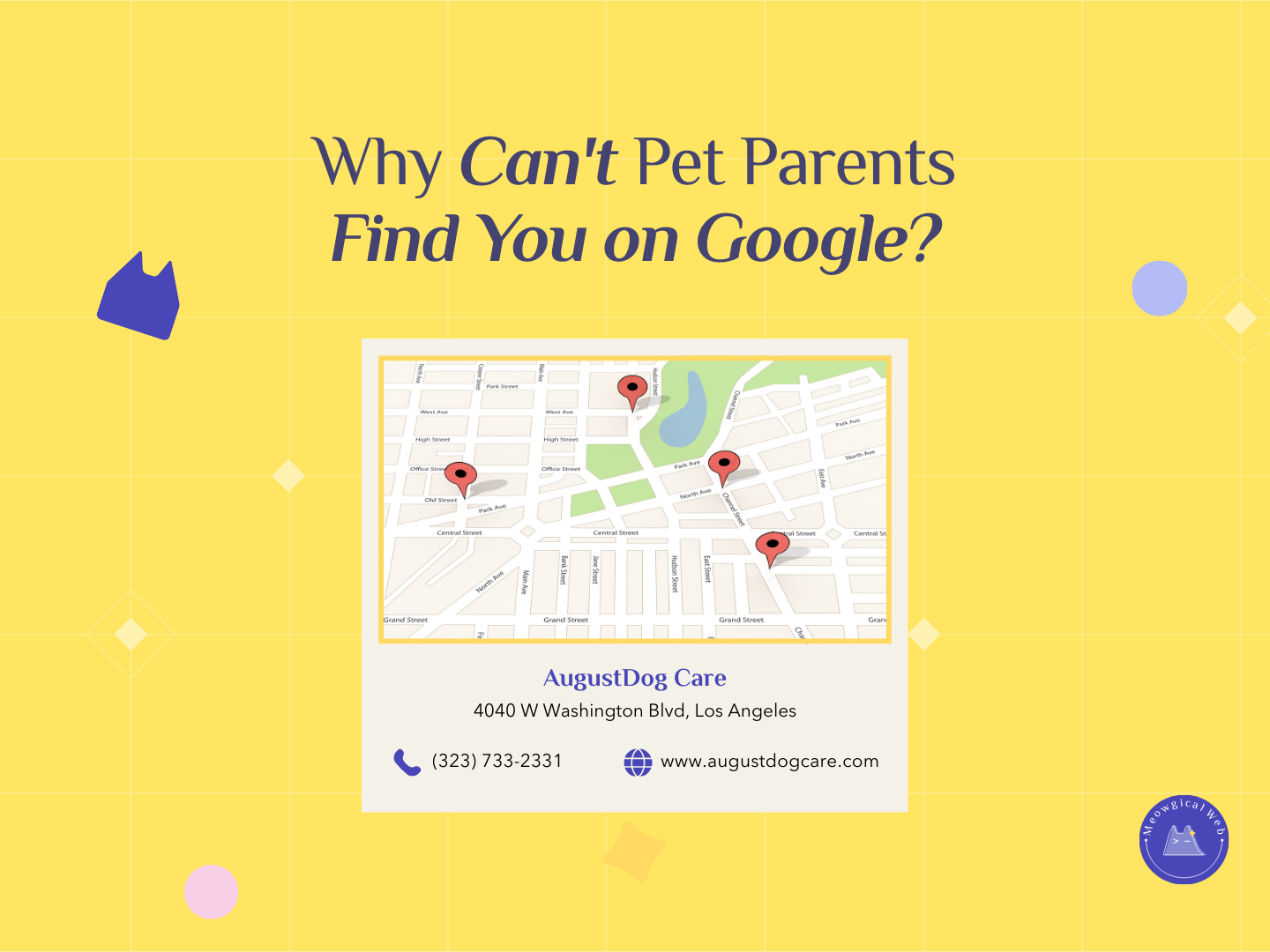
Your pet grooming business is excellent, your prices are fair, and your reviews are glowing. Yet when someone in your city searches “dog grooming near me,” you’re nowhere to be found. Meanwhile, your competitor with the mediocre website shows up first.
The reason is simpler than you think. Google doesn’t actually know where you’re located because you haven’t told it clearly enough.
Why Google Can’t Find Your Pet Business
Google isn’t psychic. When your website says “serving the greater metro area,” Google has no idea which metro area you mean. Therefore, it can’t show you to people searching nearby.
Think about how pet owners actually search. They type “vet near me” or “dog boarding in Denver” or “cat groomer 90210.” These are location-specific searches. Consequently, Google needs to match them with businesses in those exact areas.
If your website doesn’t clearly mention your city, neighborhood, or zip code, Google simply assumes you’re not relevant to that search. Meanwhile, it happily shows your competitors who did include this information.
The Location Signals Google Actually Needs
Google uses hundreds of factors to determine your location, but a few signals matter most for pet businesses.
Your page titles should include your city. “Portland Dog Grooming” will always outperform “Premium Pet Services” in local search. Additionally, every service page should mention your location as well.
Your service area description needs to be specific. Instead of saying “we serve the local area,” list actual cities and neighborhoods. For example, “We serve downtown Seattle, Capitol Hill, Ballard, and Fremont” tells Google exactly where you operate.
Your address consistency matters more than you’d think. Your address should appear identically everywhere online – same format on your website, Google Business Profile, Facebook, and Yelp. Furthermore, even small inconsistencies can confuse Google about your actual location.
Your Google Business Profile is crucial for local search. Many pet owners will see this before they ever visit your website. Fill out every field completely, choose accurate categories, add photos regularly, and respond to reviews promptly.
Location-specific content helps tremendously. If you serve multiple neighborhoods, create separate pages for each area. “Dog Boarding in West Hollywood” should be a different page from “Dog Boarding in Studio City.”
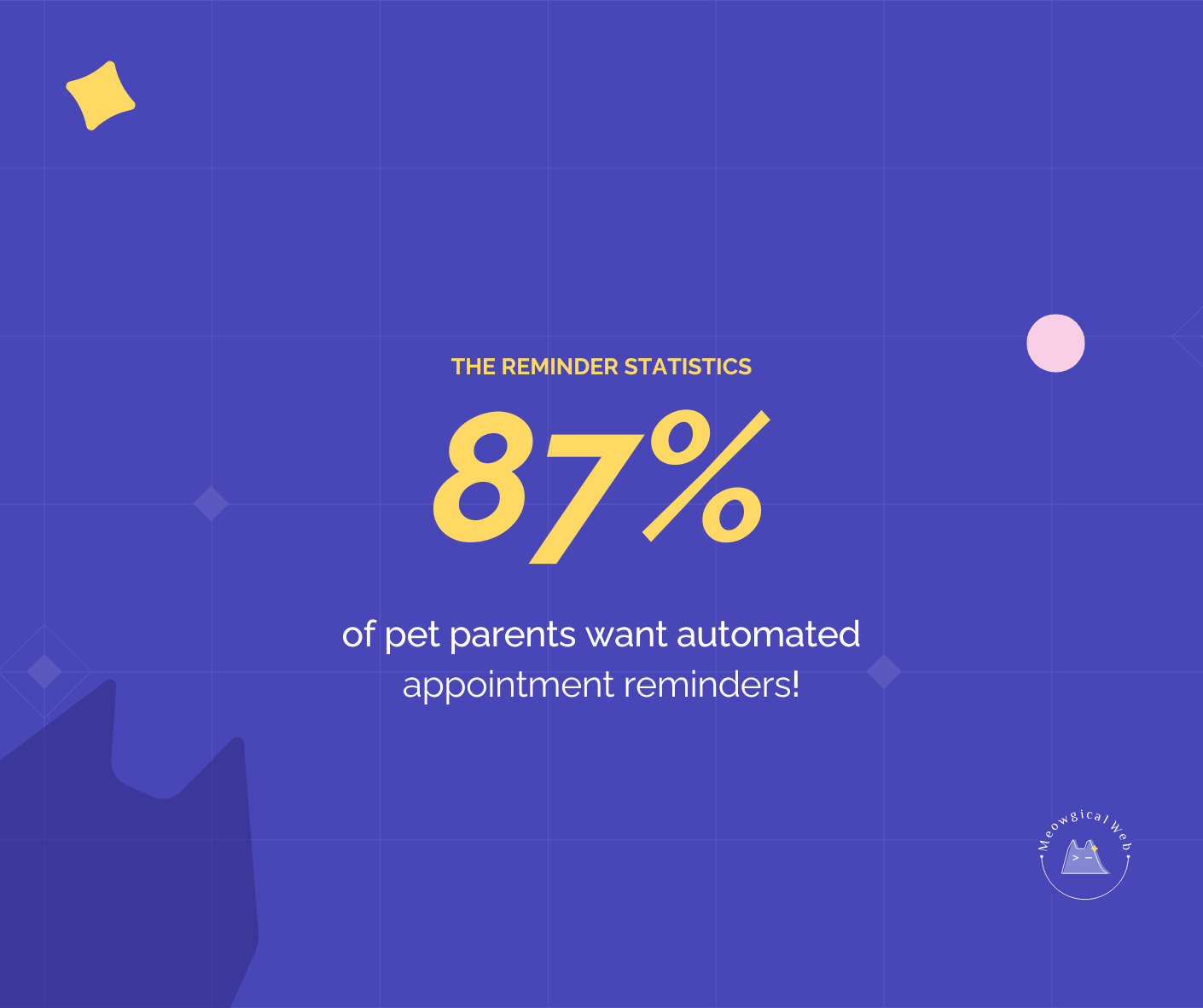
According to local SEO research, 87% of consumers use Google to evaluate local businesses. If you’re not showing up in local search results, you’re essentially invisible to most potential clients.
The Common Mistakes Pet Businesses Make
The biggest mistake is using generic page titles. “About Us” and “Our Services” tell Google absolutely nothing about your location. Instead, try “About Our Austin Pet Grooming Salon” and “Dog Grooming Services in Austin, Texas.”
Another common problem is hiding your address in the footer or burying it on a contact page. Your address should be prominently displayed on your homepage where both visitors and Google can easily see it.
Many pet businesses either don’t claim their Google Business Profile at all, or they claimed it years ago and never updated it. This is honestly the easiest fix with the biggest impact on your local visibility.
Vague service descriptions don’t help either. “We’re a full-service veterinary clinic” gives Google nothing to work with. In contrast, “Full-service veterinary clinic in Miami’s Coral Gables neighborhood” provides clear location context.
Don’t underestimate the power of mentioning nearby landmarks. “Located two blocks from Piedmont Park” or “Next to the Whole Foods on University Avenue” gives Google additional location signals that help with local ranking.
Quick Wins You Can Implement Today
Start with your homepage title right now. Add your city name to make it location-specific. “Phoenix Pet Boarding | Happy Tails Kennel” should become “Phoenix Pet Boarding | Happy Tails Kennel in Scottsdale, AZ.”
Next, update your Google Business Profile today. Log in, verify every detail is correct, add recent photos, and write a complete business description that naturally mentions your location several times.
Then create a simple service area page that lists every neighborhood you serve. Explain your coverage area using actual place names rather than vague descriptions like “the surrounding area.” Related post: Pet Services Sell Better With Trust Not Persuasion
Additionally, make sure your address is formatted identically everywhere online. Check Google, Facebook, Yelp, Instagram, and your website. Even small formatting differences can hurt your local rankings.
Finally, work your city name into your homepage content in natural ways. Phrases like “We’ve been grooming dogs in Boulder since 2015” or “Denver’s most trusted cat veterinarian” help Google understand your location while sounding perfectly natural to readers.
The Power of Neighborhood Pages
If you serve multiple areas, creating separate pages for each neighborhood can significantly boost your visibility. One grooming salon might have distinct pages for “Dog Grooming in Santa Monica,” “Dog Grooming in Venice Beach,” and “Dog Grooming in Marina del Rey.”
Each page should genuinely discuss that specific neighborhood throughout the content. Talk about local parks where dogs play, mention nearby pet stores, and reference recognizable landmarks. This proves to Google that you actually serve that area.
However, don’t just duplicate the same content with different city names swapped in. That’s thin content that Google will penalize. Instead, make each page genuinely useful for that specific neighborhood by sharing relevant parking tips, mentioning local events, and providing real area-specific value.
Google Business Profile Optimization
Your Google Business Profile might actually be the most important local SEO factor. Many pet owners never even visit your website – they see your profile on Google Maps, read reviews, and book directly from there.
Make your profile as complete as possible. Choose the most specific business category available (“Pet Groomer” rather than just “Pet Service”), and add any secondary categories that apply to your business.
Upload photos regularly because Google favors profiles with fresh, high-quality images. Show your facility, your team, happy pets, and before-and-after grooming shots. Real photos from your actual business work far better than stock images.
Try to post updates weekly if possible. Google treats profiles with regular posts as more active and relevant. Share grooming tips, announce special hours, and highlight positive client testimonials.
Most importantly, respond to every single review. Thank people for positive reviews and address negative ones professionally. This activity signals to Google that your business is actively engaged and current.
How to Check Your Current Visibility
Test your visibility right now by opening an incognito browser window (this ensures your personal search history doesn’t skew the results). Then search for your services in your city.
Try different search phrases like “dog grooming [your city]” or “vet near [your zip code]” or “[your neighborhood] pet boarding.” Do you show up in the map results? What about the organic results below the map?
If you’re not appearing at all, you definitely have work to do. If you’re showing up on page two or three, you’re getting warmer but still losing most potential clients who rarely scroll past the first few results.
Additionally, ask friends in different neighborhoods to search for your services. Their physical location affects what Google shows them, so you might rank well in one part of town while being invisible in another area.
The Mobile Search Reality
Most local searches happen on mobile devices. People searching “dog grooming near me” are typically out with their dog right now, looking for immediate results for businesses close to their current location.
Therefore, mobile optimization matters enormously for local SEO. Your website must load quickly on phones, your address and phone number should be easily tappable, and your booking process must work smoothly on small screens.
Google actively prioritizes mobile-friendly sites for local searches. If your site is slow or difficult to use on phones, you’ll rank lower regardless of how well you’ve optimized everything else.
Measuring Your Progress
Set up Google Analytics if you haven’t already, and track how many people find you through local searches. Monitor which keywords are bringing traffic and watch how your rankings change over time.
Check your Google Business Profile insights monthly to see how many people view your profile, click through to your website, and request directions. These metrics clearly show whether your local SEO improvements are actually working.
Additionally, track phone calls and booking form submissions. Local SEO should drive real business results, not just vanity metrics like website visits. If calls are increasing after your optimization efforts, you’re on the right track.
The Long-Term Strategy
Local SEO isn’t a one-time project – it requires ongoing attention. Google’s algorithm constantly evolves, new competitors enter your market, and you need consistent optimization to maintain your visibility.
Keep your content fresh by regularly updating service pages and adding new blog posts about local pet topics. Mention neighborhood events and stay actively relevant to your community.
Build local citations gradually by getting listed in local business directories, pet-specific directories, chamber of commerce sites, and local blog features. Each quality citation strengthens your local relevance.
Encourage reviews consistently by making review requests a natural part of your regular client communication. More recent reviews help your rankings while also convincing potential clients to choose you.
Start Getting Found Today
Pick just one thing from this post and do it today. Maybe you’ll update your homepage title, claim your Google Business Profile, or create a service area page. Tomorrow, pick another small task.
Local SEO improves through consistent small actions rather than massive one-time efforts. Pet owners in your area are searching for your services right now. Make sure Google can actually connect them with you by telling it exactly where you’re located – repeatedly and specifically.
Your business absolutely deserves to be found by the people who need it most. Start making that happen today.